The case in brief
On New Year's morning 2020, a McAlester taxi driver was shot dead through his driver's window on a residential street. The case went cold for more than six years. On 20 March 2026, a 29-year-old man walked into the McAlester Police Department, asked to speak to someone about a shooting six years earlier, and confessed.
The State's theory is not a robbery and not a hate crime. According to the probable cause affidavit, the defendant told police he had paid $20 for a cab ride of less than a mile, felt he had been ripped off, was angered by a camera pointed at him inside the cab, waited, called the same company back, and shot the driver who answered the call.
Nothing about that account has yet been tested in open court. The preliminary hearing on 28 September 2026 will be the first adversarial examination of the State's evidence, and the central question for it is corroboration: what, apart from the defendant's own words, ties him to the killing.
Standing caveat
Deraje Nathaniel Jackson has pleaded not guilty and is presumed innocent. Every account of the offense in this dossier is an allegation drawn from a charging instrument, a probable cause affidavit, or press reporting of them — none of it is proven fact, and no court has yet found probable cause.
Dustin Parker
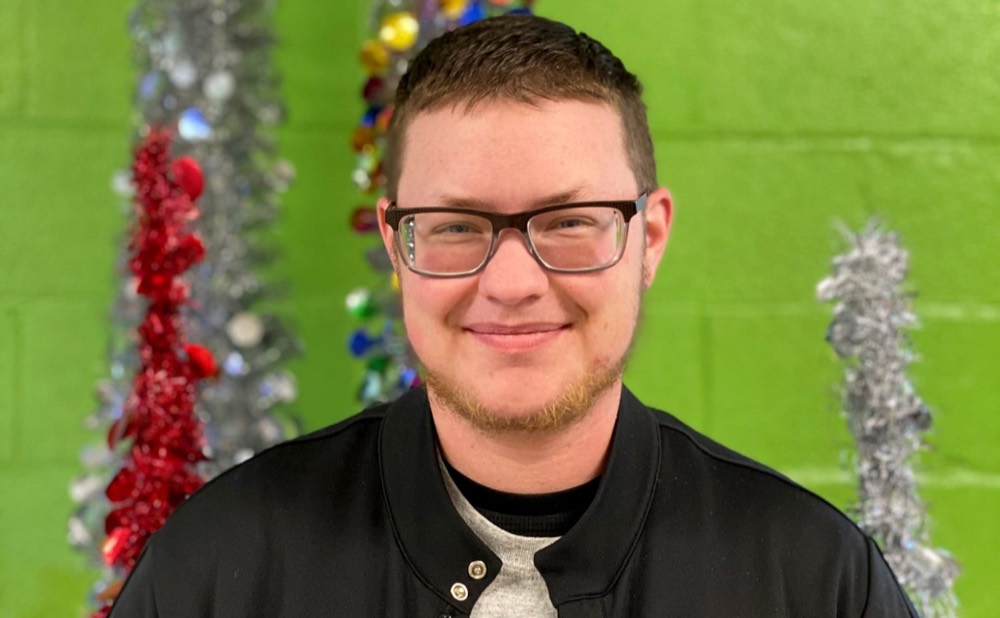
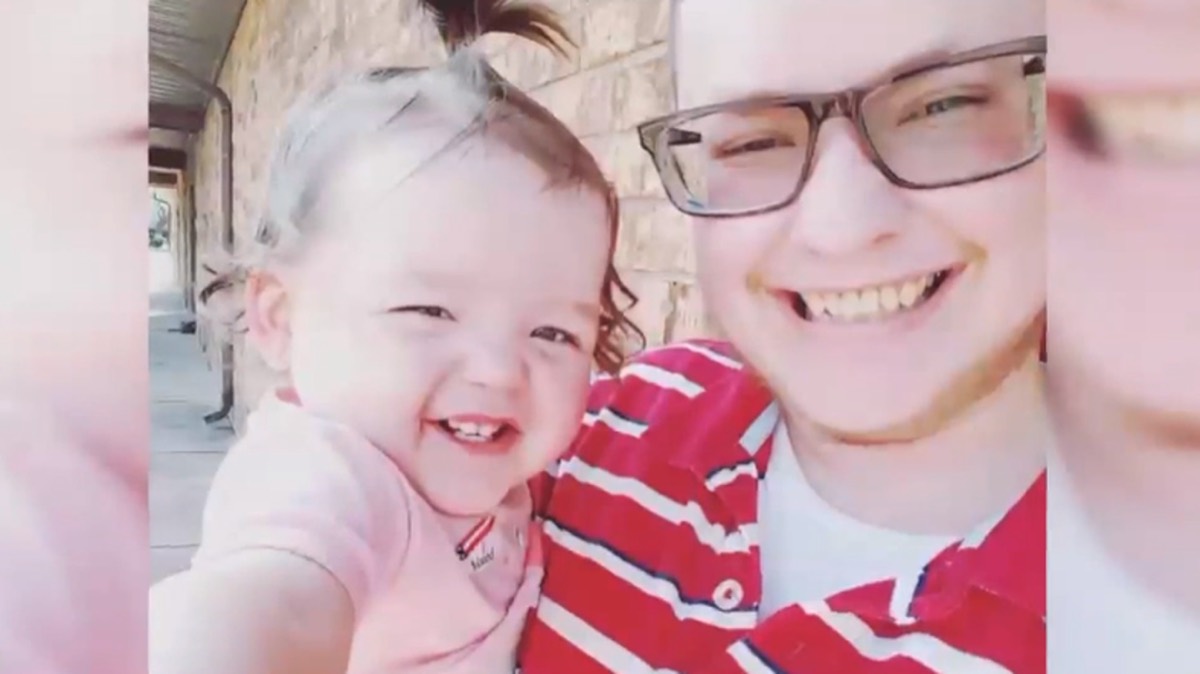
Parker was 25, married to Regina Parker, and the father of four children. He drove for Rover Taxi, a McAlester company launched in September 2019 — he was its first employee, and reporting variously describes him as a driver, a manager, and a co-founder of the venture.
He was also a visible organizer. In May 2019 he helped found the McAlester chapter of Oklahomans for Equality, known locally as Southeastern Equality, and that October he helped put on the city's first Pride parade.
Parker was a transgender man. Advocates identified him as the first transgender American killed in 2020, and his death drew national attention within days: a statement from then-presidential candidate Elizabeth Warren, and his name read into the Congressional Record by Rep. Kendra Horn.
Investigators said early on that they had found no evidence the shooting was motivated by his gender identity, while adding they were not ruling anything out. The confession, six years later, describes a dispute over a $20 fare.
Just a working man, making a living for his family, and he didn't get to come home. McAlester Police Capt. Kevin Hearod, January 2020
1 January 2020
Rover Taxi was running free rides for New Year's Eve. Parker had been seen on the company's office surveillance camera around 4:00 a.m. A coworker, Stacey Williams, said she was with him until about 4:30 a.m. Around 6:00 a.m. he stopped briefly at home. Owner Brian West later said he received two calls from Parker, at 5:08 and 5:30 a.m.
A woman called police reporting six gunshots near West Cherokee Avenue. An officer reached the area at about 6:30 a.m. and found the taxi near the intersection of South B Street and West Delaware Avenue. He radioed that something had gone through the window. Parker was in the driver's seat, shot; medics were called.
He had been struck multiple times by rounds fired through the driver's-side window from outside the vehicle. The Office of the Chief Medical Examiner is an endorsed State witness.
Time-of-death discrepancy
Sources do not agree on when the shooting occurred. The District Attorney has described it as around 5:30 a.m.; the affidavit records the defendant saying about 5 or 6 in the morning
; the officer arrived at 6:30 a.m., and several outlets report that later time as the time of the shooting itself. West's 5:30 a.m. call from Parker is the tightest anchor in the public record for when he was still alive.
Six years cold
McAlester PD worked the case with the OSBI; the FBI was also involved. A person of interest was questioned early, polygraphed, and cleared. The OSBI held dashboard camera footage from Parker's taxi. Detective Preston Rodgers told KJRH the investigators could not even characterize the motive — robbery, targeted killing, or something else.
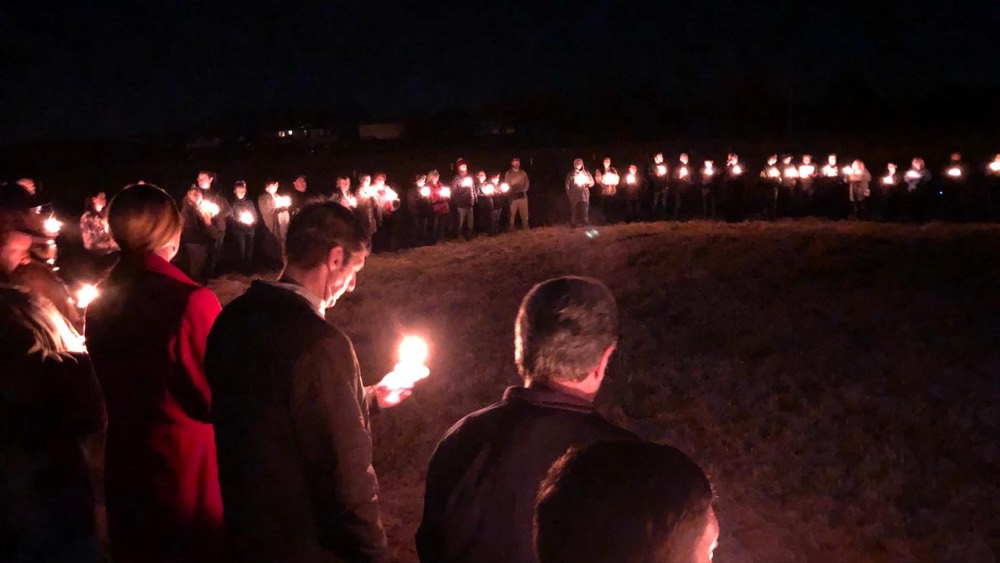
The community raised money. A candlelight vigil on 3 January 2020 drew more than 120 people; a memorial service followed on 6 January at the McAlester Expo Center. Rover Taxi first posted $5,000, then Brian West raised the reward to $20,000.
Why the jurisdiction mattered
The killing happened inside the Choctaw Nation reservation, and Parker was a tribal citizen. Six months later the Supreme Court decided McGirt v. Oklahoma, which meant crimes in Indian Country with an Indian victim fell to federal — not state — prosecutors. That is the structural reason a McAlester homicide sat with federal involvement rather than moving in state court.
In 2022 Oklahoma v. Castro-Huerta restored concurrent state jurisdiction over non-Indian defendants who commit crimes against Indian victims in Indian Country. Jackson is not a tribal citizen. On the morning of the arraignment an FBI case agent told Regina Parker the Bureau would step back and let the State take it.
Live issue for the defense
State jurisdiction here rests on Castro-Huerta and on the factual premise that Jackson is not an Indian for jurisdictional purposes. That premise is worth confirming rather than assuming — it is the kind of question that, if wrong, unwinds a conviction years later. DA Sullivan said he was unaware of federal involvement in the case at all.
It's been six years, and all of a sudden, unprovoked, this person that no one's ever heard of says, "Hey, I did it." Regina Parker, to NonDoc, 23 March 2026
Regina Parker told NonDoc the name had never once come up in six years of conversations with investigators. She said police told her the arrest hinged on information the man who confessed knew that had never been made public — the classic corroboration test for a walk-in confession.
The confession
On Friday 20 March 2026, dispatch told Lt. Kirk Johnston that a man downstairs wanted to talk about a crime. Johnston — who had been the first patrol officer on scene in 2020 and worked the case since — went down with another detective. Jackson said his brother had brought him to the station. After a Miranda advisement, he gave the following account.
- FareA cab ride of less than a mile, charged $20. He
felt like he had been ripped off.
He thought the driver's name was Dustin. - TriggerA camera in the cab was pointed toward him, and
it made him angry.
- WaitAfter being dropped off he waited, then called the cab company back for another ride and waited in a yard on Delaware Street, near a couple of vacant houses.
- ShootingThe same driver pulled up. He
walked up on him and shot him
— from the driver's side, about eight times. - WeaponA Ruger 9 mm semi-automatic handgun, thrown into Longview Lake near Grandview, Missouri. A cousin drove him there. That cousin is now deceased.
- FlightHid at a friend's house, took a bus to Kansas City days later, then an Uber to Grandview, where his parents and a brother live. He told his parents only vaguely that he had shot someone.
- StateUsing several drugs at the time of his life, but not at the time of the shooting. Alone before and during. About 5 or 6 in the morning.
- Motive to talkHe
had been sitting around pondering it.
Out of prison two years; said prisonchanged him.
He knew people in the military and did not want his actions to affect them.
Affidavit contents as reported and transcribed by NonDoc, 23 March 2026. The affidavit itself carries no scanned image on the ODCR docket.
Johnston took Jackson into custody for murder. He described Jackson's demeanor as very calm… a little downcast and sort of quiet while talking.
The department said the investigation stayed open while detectives corroborated the statement against evidence already in hand.
The defendant
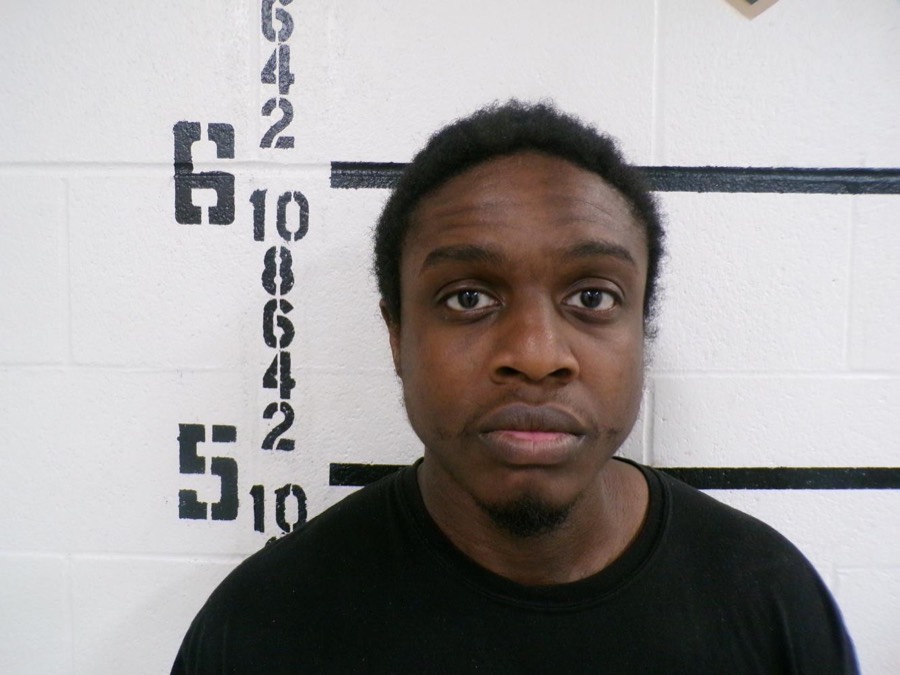
Deraje Nathaniel Jackson, born June 1996, of 2018 N. 15th Street, McAlester. He was 29 when he surrendered and 23 at the time of the alleged offense.
The timing of his custody history is the detail that matters most: DOC released him on 10 October 2019 — 83 days before the killing — after he served time on several revoked suspended sentences out of Pittsburg County, including attempting to perform an act of violence and carrying a weapon with unlawful intent.
He remained under DOC supervision until April 2022. After a July 2022 bench trial he drew four years for possession of a firearm after former felony conviction. The Court of Criminal Appeals upheld that count and dismissed an accompanying stolen-property count. He was discharged in April 2024 — squaring with his statement that he had been out of prison about two years.
The State filed a Supplemental Information alleging eight prior felony convictions, which is the enhancement vehicle rather than an element of the murder count.
| Case | Offense | Convicted | Sentence & disposition |
|---|---|---|---|
| CF-2022-72 | Possession of firearm after former felony conviction | 11 Jul 2022 | 4 years DOC. Upheld on appeal; companion stolen-property count dismissed by OCCA. |
| CF-2017-677 | Unlawful possession of controlled drug with intent to distribute | 30 Nov 2017 | 5 years DOC |
| CF-2017-525 | Uttering forged instrument (5 counts) | 14 Aug 2017 | 1 year suspended each; revoked in full 30 Nov 2017 |
| CF-2017-512 | Uttering forged instrument | 14 Aug 2017 | 1 year suspended; revoked in full 29 Nov 2017 |
| CF-2016-252 | Burglary in the second degree | 15 Jun 2016 | 7 years, balance suspended on completion of Keys to Life; revoked 5 years |
| CF-2015-562 | Plan/attempt/conspire to perform act of violence; carrying weapon with unlawful intent | 15 Jun 2016 | 5 years / 2 years, balance suspended; revoked in full 29 Nov 2017 |
| CF-2015-551 | Burglary in the second degree (2 counts) | 15 Jun 2016 | 7 years each, balance suspended; revoked 5 years |
| CF-2015-550 | Knowingly concealing stolen property | 15 Jun 2016 | 5 years, balance suspended; revoked 5 years |
Where the case stands
Jackson was arraigned by video from the Pittsburg County Jail on 23 March 2026 before Special Judge Mindy Beare, who entered a not-guilty plea for him as a matter of standard practice. Assistant DA Lauren Dutton asked for a $1 million bond; the request drew audible reaction from the other detainees in the jailhouse courtroom. Beare set it at $1 million and found, on the record, that Jackson was arrested for a violent crime under Title 57 O.S. § 571 and that prior patterns of abuse exist.
Counsel was appointed on 2 April (OIDS), with Paul M. Northcutt named on 8 April. Northcutt moved almost immediately for a competency determination.
The competency track
On 10 April Northcutt applied under 22 O.S. § 1175.3, asserting his client could not understand the proceedings or rationally assist in his defense; the State did not object. Judge McLaughlin postponed the criminal proceedings the same day. On 16 April he ordered a forensic evaluation through ODMHSAS and suspended the case, with the report due 22 May.
At the post-examination competency hearing on 29 May, Jackson stipulated to the evaluation and was found competent to proceed. Proceedings resumed. On 5 June the court set the preliminary hearing for 28 September.
Why this matters beyond scheduling
Competency was raised, litigated, and resolved by stipulation in seven weeks — the defendant never contested the finding. That closes the § 1175 question of present ability to stand trial. It says nothing about mental state at the time of the offense, and nothing about the voluntariness or reliability of a confession given by a man whose counsel, three weeks later, doubted he could rationally assist in his own defense. That sequence is the most consequential fact in the procedural record.
Toward the preliminary hearing
Subpoenas issued 1 September for MPD's Kyle Sharp and Kirk Johnston, commanding them to deliver all reports and statements to the DA at least ten days before the hearing. Both were personally served by the sheriff on 2 September; the return was filed 4 September.
Endorsed State witnesses on the Information are Johnston and Sharp (MPD), Jordan Toyne, Larry Boggus and John Graham (OSBI), and Chris Cole of the Office of the Chief Medical Examiner.
First-degree murder in Oklahoma carries death, life without parole, or life. The State has not signalled whether it will seek the death penalty. DA Sullivan is not expected to stand for re-election this year, which means the office that charged the case may not be the office that tries it.
Timeline
Open questions
These are the gaps a preliminary hearing would be expected to close, drawn from what the record does and does not contain.
What corroborates the confession?
Police said the arrest turned on non-public information Jackson knew. That holding-back detail has not been disclosed. A confession alone will not carry a first-degree murder case, and the defendant's competency was in genuine doubt three weeks after he gave it.
Was the weapon ever recovered?
Jackson placed a Ruger 9 mm in Longview Lake near Grandview, Missouri — an out-of-state search, six years on, in a lake, with the only other person who knew the spot now dead. Nothing in the docket reflects a recovery. Shell casings from the scene would be the alternative link.
What is on the dash-camera footage?
The OSBI held dash-cam footage from Parker's taxi from the first days. The affidavit says a camera pointed at the passenger is what angered Jackson. If that camera captured the earlier $20 fare, it is the single most direct corroboration available — and its absence from the public record is conspicuous.
Do the dispatch records show a callback?
Jackson said he called the company back and requested the ride that brought Parker to him. Rover Taxi's call logs and West's phone records — West took calls from Parker at 5:08 and 5:30 a.m. — should either confirm or destroy that sequence.
Six shots or eight?
The 911 caller reported six gunshots. Jackson said he fired about eight. Casing counts and the autopsy are the tiebreaker, and the discrepancy cuts both ways — a rehearsed false confession tends to match the published account rather than depart from it.
Who was the cleared person of interest?
Someone was questioned and polygraphed in January 2020 and released. Their identity and the basis for clearing them are not public, and they are discoverable material.
Is the jurisdictional premise verified?
State jurisdiction depends on Jackson not being an Indian for jurisdictional purposes. Sullivan cited Castro-Huerta while saying he was unaware of federal involvement — the premise appears to rest on the FBI's say-so rather than an independent finding.
What was the six-year investigative theory?
Investigators said in 2020 they could not classify the killing as robbery, targeted attack, or otherwise. A fare dispute escalating to a lie-in-wait ambush is a specific theory. Whether the physical evidence was ever consistent with it is untested.
The document record
Eighteen documents, 31 pages, retrieved from the Pittsburg County docket via ODCR. That is every image the docket makes available.
18 documents · 31 pages · scanned images, no text layer · retrieved from ODCR 8 September 2026
The one document that does not exist online
The docket carries a 23 March 2026 entry for F&E PROBABLE CAUSE AFFIDAVIT — the document setting out the factual basis for the charge — but unlike every other substantive entry it has no scanned image attached. It cannot be downloaded at any price. Its contents are known here only through NonDoc's transcription. Obtaining the original from the Pittsburg County Court Clerk or the DA's office is the highest-value outstanding request in this file.
Two further notes on the record. A subpoena docketed in this case on 24 March 2026 was captioned in an entirely different matter — State v. Scott Allen Parent, CF-2025-84A — and has been pulled from the case folder as misfiled. And the two 9 April docket entries are a duplicate: both rows link to the same underlying image.
Clerical artifacts worth knowing before anything is relied on in court: the pauper's affidavit form is headed "Pittsburg/McIntosh County," and the order for mental evaluation directs the report to the District Court of McIntosh County with a certificate of service running to the McIntosh County DA — recycled forms in a Pittsburg County case.
Sources
Media coverage located for the period 1 January 2020 – 8 September 2026. Reporting clusters in two bursts — January 2020 and March–April 2026 — with a cold-case feature in between. No coverage has appeared since 17 April 2026, meaning the docket is currently ahead of the press: the competency finding, the 28 September setting and the served subpoenas have not been reported anywhere.
News-CapitalMar 2026